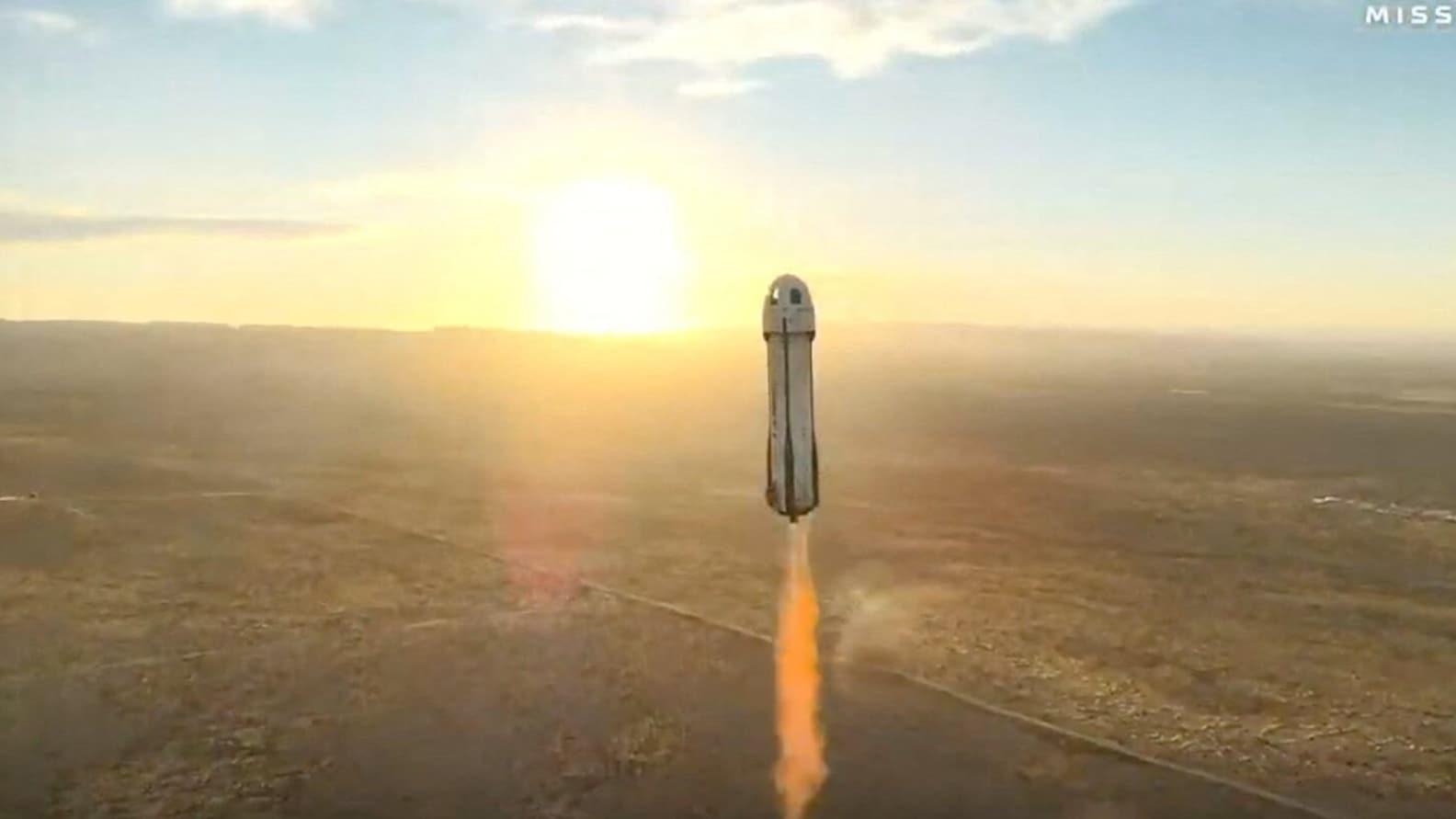
Investor enthusiasm surrounding the commercial space sector received a reality check following a recent rocket incident involving Blue Origin, raising fresh concerns about the challenges and risks facing one of the world's fastest-growing industries. The event comes at a time when private space companies have attracted billions of dollars in investment as governments, defense agencies, and commercial enterprises increasingly rely on private providers for launch services, satellite deployment, and future exploration missions. While the sector has experienced remarkable growth in recent years, the incident serves as a reminder that aerospace development remains an inherently complex and high-risk undertaking.
Blue Origin, founded by Jeff Bezos, has emerged as a key player in the global space race through its investments in reusable rocket technology and long-term ambitions that include lunar exploration, orbital infrastructure, and broader access to space. However, even the most well-funded companies face significant engineering and operational challenges that can impact launch schedules, mission performance, and investor sentiment. The latest setback highlights the reality that technological advancement in aerospace is rarely linear and often involves periods of testing, failure, and refinement.
Industry analysts note that such incidents are not uncommon in the space sector. Historically, both government agencies and private aerospace companies have experienced launch failures, technical anomalies, and development delays before achieving long-term success. Nevertheless, these events can trigger short-term uncertainty in financial markets, particularly when investor expectations are high and valuations are closely tied to future growth prospects.
The development also comes as competition intensifies among commercial space companies seeking to capitalize on rising demand for satellite launches, defense contracts, scientific research missions, and emerging space-based services. Industry leaders continue to emphasize that innovation in aerospace requires extensive testing and that occasional setbacks remain a necessary part of the development process. Despite the incident, many experts maintain a positive long-term outlook for the commercial space industry, citing growing government investment, advances in reusable launch systems, and expanding partnerships between public and private organizations.
For investors, the event underscores the delicate balance between opportunity and risk in a sector defined by ambitious technological goals. While the vision of a thriving space economy continues to attract significant capital, the latest incident highlights the importance of operational execution and reliability. As companies push the boundaries of space exploration and commercialization, the industry's future growth will depend not only on groundbreaking innovation but also on the ability to conduct increasingly complex missions safely, efficiently, and consistently.